USE CASE: How to Use GenAI to Translate a Concept into a Brief a Designer Can Execute for a Japanese Restaurant
A real-world GenAI marketing use case: how a restaurant’s marketing concepts stopped getting lost in translation, using GenAI to turn a feeling in the leader’s head into a brief a designer could actually execute, without eroding the idea.

Briefing creative is a translation problem: the concept lives in the marketing leader’s head, the execution lives in the designer’s hands, and the brief is the bridge between two languages. This is what crossing that gap with GenAI looks like in practice: how a restaurant’s concepts stopped dying in the handoff.
The Context: a Good Concept, a Bad Handoff
A Japanese restaurant with dine-in and delivery, a marketing lead with clear ideas, and a designer perfectly capable of executing them. And yet the work that came back rarely matched the idea that went in: not because either person was at fault, but because something happened in between, every time, on the way from the concept to the brief.
The Challenge: 2 languages, 1 gap
A marketing leader thinks in outcomes and feelings – “I want this to feel premium but warm, calm but appetising” – and a designer executes in specifics – composition, hierarchy, palette, type, negative space. Between those two languages sits a gap, and that gap is where good concepts go to die. So the brief that reached the designer was a vague approximation – “make it pop”, “more premium”, “you know the vibe” – which doesn’t give a designer freedom; it gives them a guess. The guess comes back, it isn’t what was in the leader’s head, and 3 rounds of revision later everyone is frustrated and the concept has quietly eroded. The problem was never the designer’s craft or the leader’s taste. It was that no one could translate the concept in one person’s head into a brief the other could actually execute.
Concepts die in the handoff, not the hands: Marketing leaders think in feelings: “premium, calm, appetising”. Designers execute in specifics: composition, palette, type, negative space. Visual literacy is the bridge between those 2 languages, and most briefs fall straight into the gap. A concept rarely dies in the designer’s hands; it dies in the handoff.
The GenAI Workflow: an Interpreter between 2 Languages
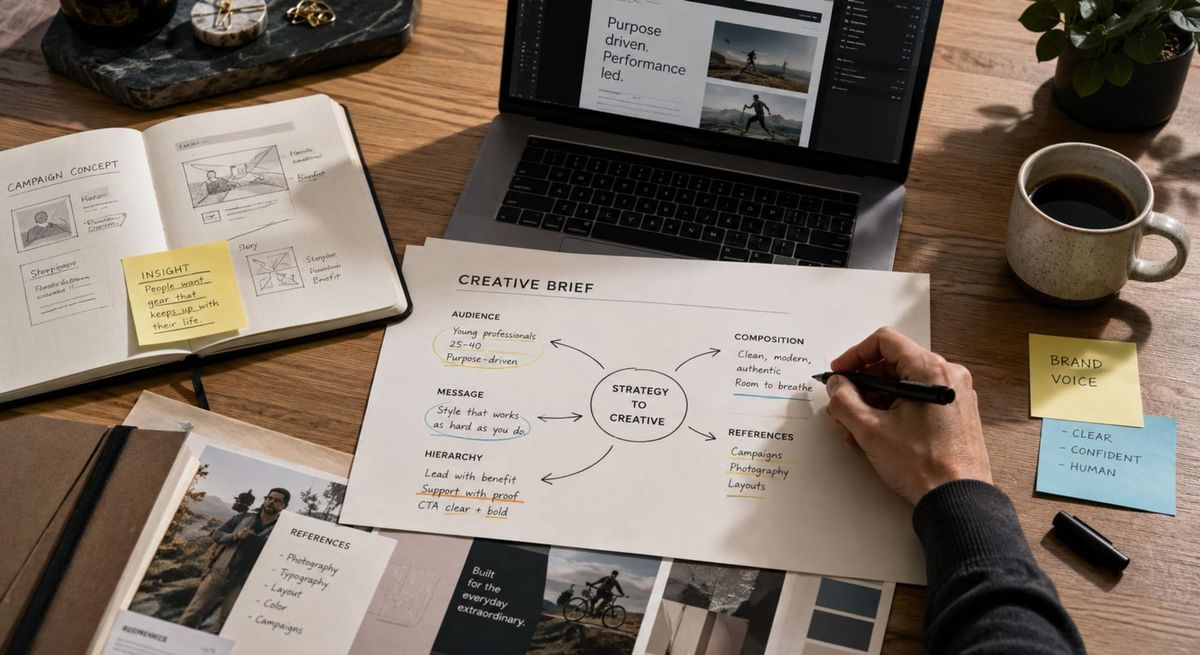
The fix was to treat the brief as a translation problem and give the manager an interpreter. Starting from the concept in plain, outcome language – what it should feel like, what it’s for, who it’s for – the manager used GenAI to translate that into design-executable direction: the mood and references, the composition and hierarchy, the palette and type direction, the do’s and don’ts – the specifics a designer needs, expressed in a designer’s terms. Crucially, GenAI also worked backwards: it asked the questions that surfaced what he actually meant by “premium” or “warm”, pinning the concept down precisely before translating it, so it survived the handoff instead of eroding in it. What reached the designer was no longer a vibe and a hope, but a brief that carried the concept intact, and still left room for craft.
You are a creative director translating a marketer/manager’s concept into a brief a designer can execute. Here is my concept, in my own words: what it’s for, who it’s for, and how I want it to feel: [paste].
First, ask me the questions that pin down what I actually mean – especially feeling-words like “premium”, “warm”, “bold” – so we’re precise before translating.
Then turn the concept into a designer-ready brief: mood and references, composition and hierarchy, palette and type direction, and clear do’s and don’ts – in design terms, but leaving room for the designer’s craft rather than prescribing every pixel.
Do NOT invent strategic intent I didn’t give you, the concept is mine. Mark anywhere you’re guessing what I meant as CONFIRM WITH ME.
The caveat that decides whether this works. GenAI is a fluent translator between marketing-speak and design-speak, which is exactly why it needs watching at both ends. It will confidently decide what you meant by “premium” and translate that, even when its guess isn’t yours; a brief that’s precise, but wrong is worse than a vague one, because the designer executes it faithfully. So the leader has to confirm the translated brief still matches the concept in their head before it goes out. Two boundaries matter. GenAI translates the concept; it does not get to originate it; the strategic intent, the taste, the “why this” is the leader’s job, not something to outsource to a confident draft. And a brief is direction, not dictation: translate the concept into executable terms, then leave the designer room to do what only a designer can. GenAI bridges the 2 languages; the concept stays yours and the craft stays theirs.
The Result: the Concept Arrived Intact
The handoff stopped eating the concept. Briefs left the manager’s desk carrying what was actually in their head (the feeling translated into the specifics that produce it) so the first version a designer returned was in the right neighbourhood instead of a guess, and the revision spiral shrank. The manager didn’t become a designer; they became literate enough to be understood, which is a different and more useful thing. And the designer got what they had always wanted: a brief with a clear concept and clear constraints, plus the room to apply their craft inside them. No invented figures here: the change is that the concept that started in one person’s head arrived more or less intact in another’s, which is the whole job of a brief.
Recommended KPIs to Follow
A brief is judged on whether the concept survives the handoff, visible in how cleanly the work moves from idea to approved asset. Here’s where the industry sits and the direction this work should push it. The point is the direction of travel, not a promised number.
Revision Rounds to Approval
The clearest signal of a clean handoff: how many rounds of edits a piece needs before sign-off. Translate the concept well and the first version lands close, so the rounds fall; vague briefs are what drive them up.
Benchmark: 2 rounds of revision is a common industry norm and contractual cap; teams averaging three or more usually have an upstream brief problem; a vague brief is cited as the single most reliable predictor of excess revision rounds (Marq; Simple).
Concept-to-Approval Cycle Time
How long a piece takes from concept to signed-off asset. A brief that carries the idea cleanly collapses the back-and-forth that stretches simple jobs into weeks; watch the days fall as the translation improves.
Benchmark: As a rough yardstick, low-risk creative should move from brief to final sign-off in about 2-3 days; jobs stuck far beyond that usually signal unclear briefs or ownership, not hard content (Marq). Set your own baseline by asset type.
First-Version Concept Fidelity
The most honest measure: how often the designer’s first draft is recognisably the concept you intended, rather than a guess. It’s subjective, but tracking it tells you whether the translation – not the designer – is the thing that improved.
Benchmark: No public figure, an internal judgement; rate first drafts against the original concept and watch the “right neighbourhood on the first try” share climb.
Fewer rounds and faster cycles are the visible payoff; concept fidelity is the real one. Watch them together, speed that comes from lowering the bar isn’t the win. Track your own trend; the benchmarks are context.
Why this Transfers
Anyone who hands a concept to someone else to execute – a designer, a developer, an agency – loses some of it in the handoff, and usually blames the executor. The transferable move is to treat the brief as a translation between 2 languages, and to get precise about what your feeling-words actually mean before the work starts, because the concept doesn’t fail in the doing; it fails in the describing.
Recommended Articles:
 Diana Socaciu