USE CASE: How to Use GenAI to Clarify Two Positions for Two Audiences Before Promoting
A real-world GenAI marketing use case: how a Japanese restaurant stopped marketing its dine-in experience and delivery convenience as one thing, using GenAI to clarify two distinct positions for two different audiences before spending a cent on promotion.
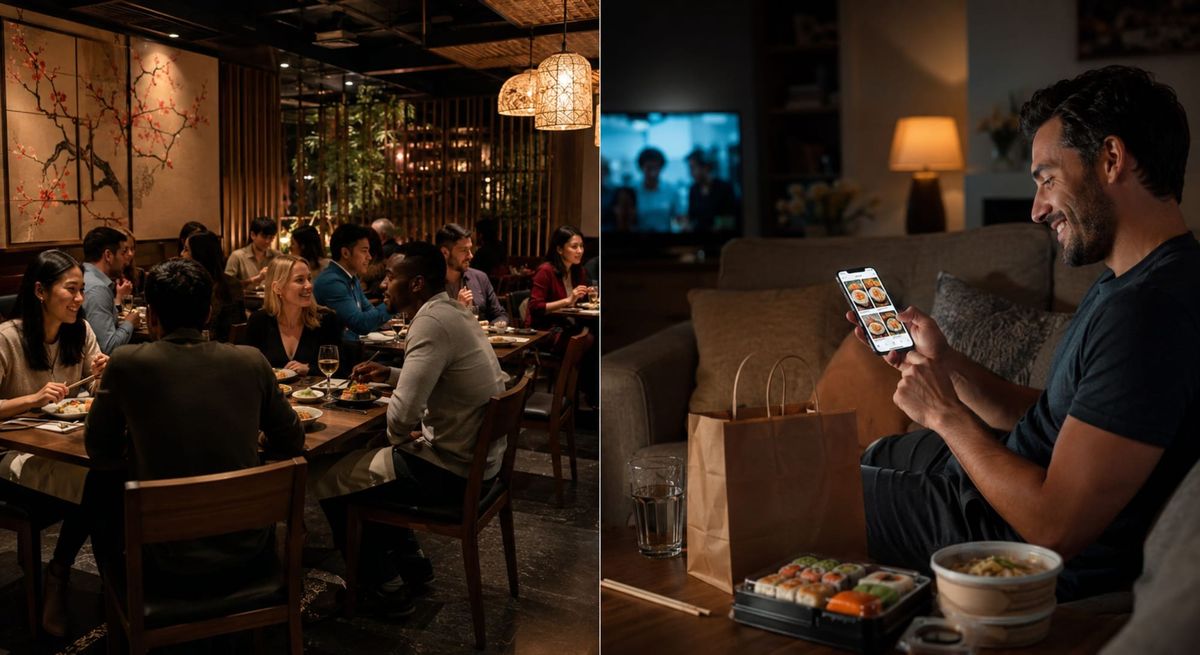
Positioning comes before promotion; get the position wrong and every ad just amplifies the confusion. This is what doing the positioning first with GenAI looks like in practice: how a restaurant pulled its blurred “dine-in and delivery” message into two sharp ones, each built for the audience it was actually for.
The Context: One Message for Two Very Different Customers
A Japanese restaurant with two healthy lines of business – a dine-in room and a busy delivery operation – and one set of marketing trying to speak for both. The website, the social posts, the ads all blended the two: a bit of atmosphere, a bit of convenience, a single voice doing double duty for two audiences who wanted opposite things.
The Challenge: Dine-In and Delivery Aren’t One Product
Dine-in and delivery look like two channels for one restaurant. They’re really two different products sold to two different people. The dine-in customer is buying an experience: the room, the service, the occasion, a reason to leave the house. The delivery customer, thumb hovering over an app at 8pm, is buying the opposite: convenience, speed, a reliably good meal with no effort and no occasion at all. Marketed as one thing, the message served neither: “ambience and atmosphere” means nothing to the hungry scroller, and “fast, hot, delivered” undersells the room to a couple planning a night out. The instinct was to fix it with promotion: a better ad, a sharper offer. But you cannot promote your way out of muddled positioning. Promotion only amplifies the position already there, and if the position is two-things-blurred, a bigger budget just blurs it louder.
Two businesses sharing a kitchen: A restaurant with dine-in and delivery isn’t one business with two channels; it’s two businesses sharing a kitchen. The date-night couple and the hungry scroller want opposite things; sell them the same message and you sell neither.
The GenAI Workflow: Two Positions, Settled before Any Promotion
Before writing a single ad, the work was to separate the two. The owner used GenAI to pull the conflated offer apart into two distinct positions: one for dine-in, one for delivery, interrogating each on the same questions: who is this for, what job are they hiring us to do, what is the one promise that matters to them, and what proves it. GenAI drafted two positioning statements that shared a kitchen and almost nothing else: the dine-in position built on experience and occasion, the delivery position built on reliability and ease. It also did the useful negative work: flagging where a line meant to sell the room had drifted into the delivery message, and the reverse. Only once the two positions were clear did promotion get planned, each on the channel and to the audience it was actually for.
You are a positioning strategist for a Japanese restaurant with two distinct offers: a dine-in experience and a delivery service. Treat them as two products for two audiences, not one business with two channels.
For EACH offer separately, draft a positioning statement: who it’s for, the job they’re hiring it to do, the single promise that matters most to them, what proves that promise, and crucially who and what it is NOT for.
Keep the two genuinely distinct: if your two statements could be swapped without anyone noticing, they aren’t positioned. Avoid generic restaurant language (“authentic”, “warm atmosphere”) unless it’s specific and ownable. Mark any claim about our food, market or customers you’re assuming rather than drawing from what I told you as VERIFY WITH ME.
The caveat that decides whether this works: GenAI is a fast positioning partner with two reliable failure modes. First, it collapses toward the generic: ask it to position a Japanese restaurant and it reaches for “authentic cuisine, warm atmosphere, fresh ingredients” – words true of every competitor, and therefore positioning nothing. Second, it doesn’t know your market: it will assert what makes you different and what your customers want with total confidence, when only you and your actual customers know that. Positioning is a series of choices about what you are not and who you are not for, and GenAI, left alone, wants to please everyone, which is the opposite of positioning. Its value is the structure and a fast first draft of the distinction; the choices, the truth and the exclusions stay with you.
The Result: Two Sharp Messages Instead of One Blurred One
Two muddled half-messages became two sharp ones. The dine-in marketing could finally sell what dine-in actually sells (the room, the occasion, the reason to come in), without hedging it with delivery talk; and the delivery presence could promise what a hungry scroller actually wants (reliable, fast, genuinely good), without apologising for not being a night out. Each audience heard a message built for them, on the channel they were already on. And because the positioning was settled first, every promotion that followed had something clear to amplify rather than something blurred to shout. No invented figures here: the change is that one restaurant stopped competing with itself for the attention of two different people.
Recommended KPIs to Follow
Positioning sits upstream of promotion, so its effects show up in what happens after, which means the honest test is your own before-and-after, not a public number. These are the metrics to watch as the two positions go live.
Promotion Performance by Audience
The direct test of positioning: a message built for one audience should outperform the old blended one with that audience. Run the positioned version against the blended version and compare click-through and response per audience; this is where clear positioning proves itself.
Benchmark: No single public figure, an internal A/B between the positioned and blended message is the real test. For context, McKinsey finds relevant, audience-matched messaging can lift revenue 5-15% across the customer base versus one-size-fits-all (McKinsey).
Delivery Conversion (the convenience position)
For the delivery audience, the right promise is speed, reliability and ease, so watch the share of delivery-app and online views that become orders once the message stops selling “atmosphere” to someone who just wants dinner. Read it as a trend, not a single-cause result.
Benchmark: No clean public figure for messaging alone, an internal metric; baseline delivery conversion under the old blended message and track it as the convenience-led message goes live.
Dine-In Bookings (the experience position)
For the dine-in audience, the promise is occasion and experience, so watch covers and bookings driven by the experience-led channels. The point isn’t more reach; it’s reaching the night-out customer with a message that finally sounds like a night out.
Benchmark: No public benchmark for this attribution, an internal metric; track bookings and covers from the experience-led marketing and compare against the blended baseline.
Positioning’s payoff is comparative, not absolute; the number that matters is each positioned message against the blended one it replaced. Track your own before-and-after; the benchmark is only context.
Why this Transfers
Any business with two offers, two audiences or two jobs-to-be-done faces this: the temptation to say one thing to everyone, and the promotion budget to say it louder. The transferable move is to resist promoting until the positioning is settled, because promotion amplifies whatever position it finds, and the cheapest marketing fix in the world is clarifying what you’re selling, and to whom, before you pay to broadcast it.
Recommeded Articles:
 Diana Socaciu