USE CASE: How to Use GenAI to Art-Direct On-Brand Food Photography in a Japanese Restaurant
A real-world GenAI marketing use case: how a Japanese restaurant turned ad hoc, off-brand food photography into one consistent look, using art-direction language and GenAI to build repeatable shot lists and mood briefs anyone could shoot to.
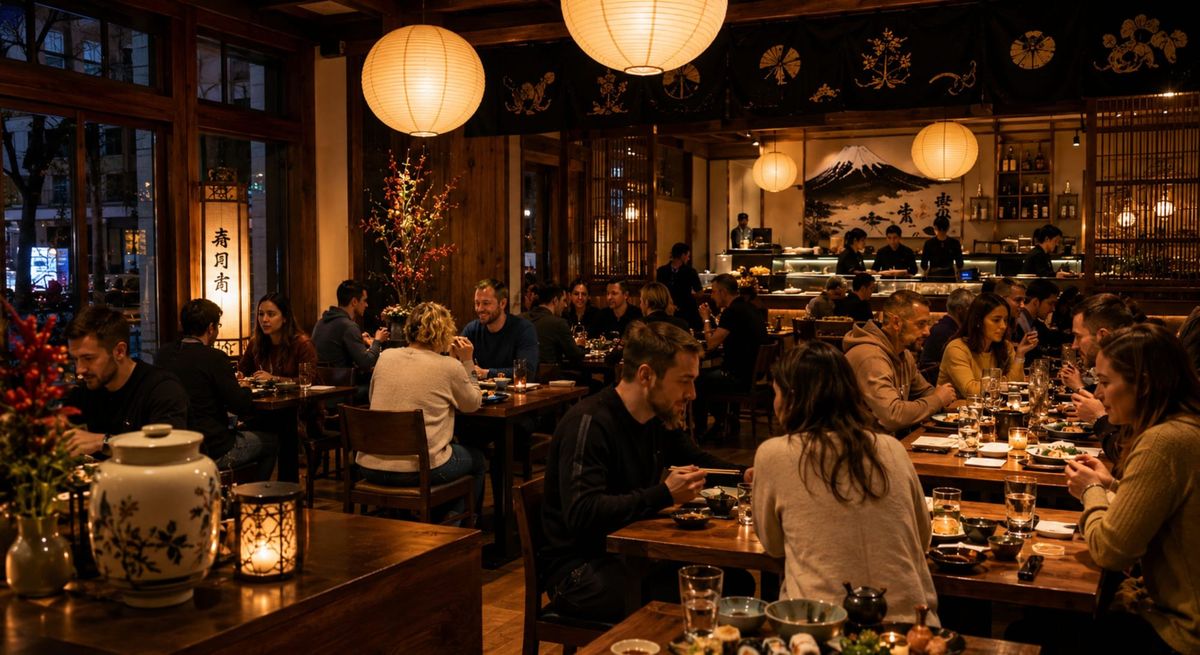
Food photography is the first taste a customer gets – on Instagram, on the website, on the delivery app. This is what art-directing it with GenAI looks like in practice: how a restaurant stopped taking a different photo every time and built shot lists and mood briefs that made the food look like one brand, whoever was holding the camera.
The Context: a Different Ohoto Every Time
A Japanese restaurant with a strong kitchen, a busy dine-in room and a growing delivery operation, and food photography taken whenever someone remembered: a phone before service, a freelancer once in a while, the occasional stock image to fill a gap. Each shot was fine on its own. Together they looked like ten different restaurants – different lighting, angles, backgrounds and moods – which, on a feed and a delivery app, reads as careless: the opposite of the care that goes into the food.
The Challenge: It’s a Direction Problem, Not a Photography Problem
Off-brand photos aren’t a photography problem; they’re a direction problem. The camera was never the variable, but the brief was, because there wasn’t one. Without a shared visual language, every shot is a fresh negotiation with chance: this person’s instinct, that phone’s auto-white-balance, whatever surface happened to be nearest. And inconsistency costs more than looks. On a delivery app, where the photo is the menu, a careless or mismatched image doesn’t just fail to sell, a poor one can convert worse than no photo at all, because it signals low effort on the very thing standing in for the food.
A recipe for the photo: A restaurant would never plate the same dish a different way every service; yet that is exactly how most of them shoot it. Art direction is a recipe for the photo: the same inputs, the same result, every time, whoever is in the kitchen. The talent was never the problem; the absence of a recipe was.
The GenAI Workflow: Art-Direction Language, Then Shot Lists and Mood Briefs
The work began away from the camera, by naming the look. The team articulated its art-direction language (the lighting, the palette, the surfaces and props, the plating principles, the mood), turning a vague “warm and authentic” into specific, repeatable rules. GenAI helped pin that fuzzy feeling down into concrete specifications, then did the scalable part: for each dish, it generated a shot list and mood brief (hero angle, supporting shots, lighting, props, and the clichés to avoid) that a line cook with a phone or a freelancer once a quarter could follow to the same result. The real food was then photographed to the brief. Human taste owned the look; GenAI made it repeatable.
You are a food-photography art director for a [cuisine / positioning] restaurant. Here is our visual direction: [lighting, palette, surfaces, props, plating principles, mood, references]. And here is a dish: [name, components, garnish, vessel].
Produce a shot list and mood brief a phone-wielding staff member or a freelancer could follow to get an on-brand result without guessing:
(1) the hero shot: angle, framing, crop;
(2) two or three supporting shots: detail, context, process;
(3) lighting setup;
(4) surface, props and styling rules;
(5) what to AVOID for this cuisine (the clichés).
Give specific instructions, not adjectives. Flag anything that depends on brand taste I haven’t told you as a DECISION FOR ME. Note: this brief is for photographing the real dish; do not generate an image of the food.
The caveat that decides whether this works: GenAI holds a generic, averaged idea of “Japanese food photography” (cherry blossoms, a single chopstick lift, steam over black slate), and offers it with total confidence. Left unattended, it briefs you toward every other restaurant’s look, not yours; the art direction that makes it yours is a human decision. And a sharper line for food: GenAI can generate a photorealistic bowl of ramen, but that bowl is not your ramen. Showing a generated image as a real menu item – especially on a delivery app – is a misrepresentation you can be held to. GenAI builds the repeatable brief; the real dish is really photographed to it.
The Result: One Restaurant, Whoever Held the Camera
Food photography stopped being a roll of the dice. Whoever held the camera (a line cook with a phone before service, a freelancer once a quarter) worked from the same shot list and mood brief, so the feed, the website and the delivery apps finally looked like one restaurant instead of ten. The look became an asset the team owned, rather than a style that walked out the door with whichever freelancer last shot it. No invented figures here: the change is that the brand’s food finally looked the way it actually tastes: considered, consistent, and unmistakably theirs.
Recommended KPIs to Follow
Consistent food photography is an operations habit with a commercial tail. These are the metrics to watch: where the industry sits, and the direction this work should push them. The point is the direction of travel, not a promised number.
On-Brand Shot Rate (first-time-right)
The share of photos usable and on-brand without a reshoot. A written shot list and mood brief is the lever – when the recipe exists on paper, consistency stops depending on who held the camera. This is the metric the work controls most directly.
Benchmark: No reliable public figure, an internal metric; set your own baseline and track how few shots now need redoing.
Delivery-App Order Conversion
On a delivery app the photo is the menu; what a hungry, uncertain browser acts on. Consistent, appetising shots lift the share of menu views that become orders; and because quality is what matters, this is about better photos, not just more of them.
Benchmark: Platform data puts the lift from quality menu photos at roughly 15-44% more orders (DoorDash up to 44%, GrubHub ~30%, Deliveroo ~24%) — with one caveat that makes this case: a poor, off-brand snapshot can convert worse than no photo at all (Snappr; platform data).
Social Engagement and Discovery
Saves, shares and profile visits are the signals that the feed is doing discovery work. A consistent, appetising look is what gets a restaurant found and remembered; an inconsistent one quietly reads as careless.
Benchmark: Social benchmarks are noisy, but the direction is well-evidenced: the large majority of diners check food photos before choosing where to eat (FoodShot, 2026). Track your own saves and shares per post.
The on-brand shot rate is the metric the shot list controls directly; orders and engagement follow, slowly and for many reasons. Track your own trend; the benchmarks are context, not a scoreboard.
Why this Transfers
A consistent look isn’t a luxury a small team can’t afford; it’s the cheapest way to look bigger and more careful than you are. The transferable move is to stop treating each photo as a one-off and write the recipe once: name the look, turn it into a shot list, and let anyone execute it. The brand stops walking out the door with whichever freelancer last shot it.
Recommended Articles:
 Diana Socaciu