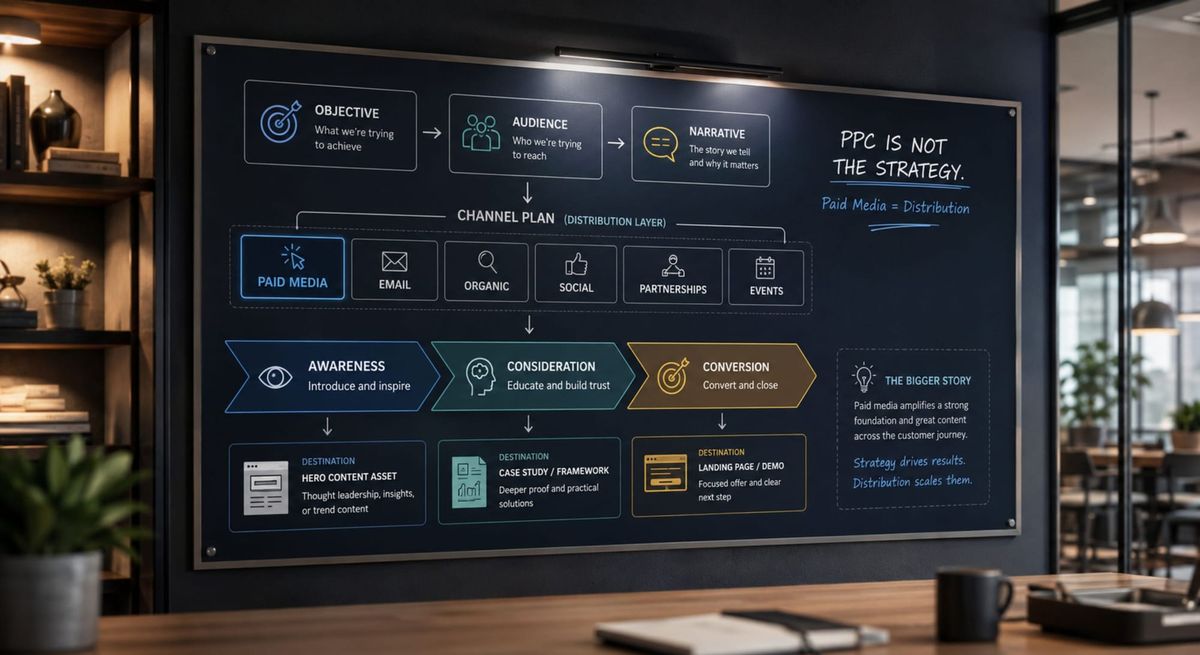
USE CASE: How to use GenAI to Reframe PPC Inside the Full Patient Journey for a Dental Clinic
A real-world GenAI marketing use case: how a large dental clinic stopped treating new-patient ads as its strategy, using GenAI to map the full patient journey, find where paid clicks were leaking, and reframe PPC as one stage of a funnel instead of the whole plan.

“PPC is not a strategy” sounds like a provocation until you see what happens when a clinic treats it as one. This is that situation in practice: a dental clinic running new-patient ads with no funnel behind them, and how reframing PPC inside the full patient journey turned expensive clicks into something that could actually become patients.
The Context: the Ads Were On, So Marketing Felt Handled
A large regional dental clinic running new-patient PPC, paid search ads to bring in people looking for a dentist. The ads were live, the clicks were arriving, the budget was being spent, and on the surface marketing looked like it was working. What nobody had asked was what happened to a click after it landed.
The Challenge: New-Patient Ads with No Funnel behind Them
The ads ran with nothing built behind them. A click landed on a generic homepage rather than a page built for what the ad promised; an enquiry might be answered quickly or might sit for a day; there was no defined follow-up for someone who didn’t book on the first attempt, and no plan for turning a first visit into a returning patient. PPC was being treated as the strategy, “we run ads”, when it is only ever the first step of one. That is the trap: PPC is measurable, immediate and active, so it feels like a strategy while quietly being a single tactic pouring expensive clicks into an undefined funnel. The money was real; the journey it was supposed to start was not.
A click is not a patient: PPC is a way of buying clicks, and a click is not a patient. Buying clicks feels like a strategy because something is visibly happening, but it’s a single tactic with no answer to the only question that matters: working toward what? Without a funnel waiting behind it, a click isn’t the start of a journey; it’s the end of your money.
The GenAI Workflow: Map the Journey, Find the Leaks, Build the Funnel
The fix wasn’t to optimise the ads; it was to build the journey the ads were supposed to feed. The team used GenAI to map the full patient journey end to end (from the search that triggers an ad, through the click, the landing, the enquiry, the booking, the first visit, and the recall that brings a patient back), and then to find where, along that journey, paid clicks were leaking out: a generic landing page that didn’t match the ad, enquiries with no follow-up, first visits with no path to a second. With the journey mapped and the leaks named, GenAI helped draft the missing pieces: landing pages matched to each ad’s intent, a follow-up sequence for enquiries that didn’t book, recall messaging for after a first visit; so the PPC finally sat inside a funnel instead of in front of a void. The ads barely changed. What changed is that a click now had somewhere to go.
You are a patient-journey strategist for a dental clinic that runs new-patient PPC ads. Here is what happens now: our ads, where clicks land, how enquiries are handled, how bookings happen, and what (if anything) happens after a first visit: [paste the real, current process].
1. Map the full patient journey from search to recall, and mark exactly where paid clicks are leaking out, the gaps between the ad and a booked, returning patient.
2. For each leak, draft the missing piece (a landing page matched to the ad’s intent, follow-up for people who don’t book first time, recall after a first visit), in plain, compliant language, no health claims or guarantees a dental clinic can’t make.
Work from the real process I gave you, not an ideal one; if I’ve left a step vague, ask rather than assume. Be honest about what can and can’t be cleanly attributed from click to booking, and mark anything you’re guessing as CONFIRM WITH ME.
The caveat that decides whether this works: The strategic move here is easy to mistake for an optimisation one. Faced with PPC that isn’t delivering, the instinct is to fix the ads (better keywords, sharper bids, a new headline), and GenAI will happily help you polish the tactic. But polishing a tactic that feeds nothing just buys better-targeted clicks that still leak out the back; the fix is the funnel, not the ad. Two boundaries on building it. GenAI can map a generic patient journey, but it does not know yours (how enquiries are really handled, who actually follows up, where leads truly leak), so the map is a draft to validate against the clinic’s real operations, not a description of them. And dentistry is a regulated, trust-sensitive field: ads, landing pages and follow-ups touch health claims and advertising rules, so the funnel’s content has to stay honest and compliant, never promising outcomes a clinic can’t stand behind. GenAI architects the funnel; the real operations, the compliance line, and the honest read on attribution stay human.
The Result: a Tactic Put Back in its Place
PPC stopped being the strategy and became a stage in one. With the full patient journey mapped, the clinic could finally see what its ad spend had been doing (buying clicks that landed somewhere generic and leaked out before becoming patients), and could plug the leaks: landing pages that matched the ads, follow-up for enquiries that didn’t book first time, recall for first visits. The same spend now bought clicks that had somewhere to go and someone to catch them. And reframing PPC inside the journey turned an unanswerable question: “is our PPC working?”, into an answerable one: working toward a booked, returning patient, with the leaks between named and closing. No invented figures here: the change is that the clinic stopped mistaking a tactic for a strategy, and gave its most expensive clicks a funnel to land in.
Recommended KPIs to Follow
The whole point is to measure past the click. Watch what a click becomes, what a patient costs, and whether they come back. Here’s where the evidence sits and the direction this should push things. The point is the direction of travel, not a promised number.
Click-to-Patient Conversion
The share of paid clicks that become booked, first-visit patients; not clicks, not even enquiries, but patients. It’s the number that exposes the funnel: a healthy click-through with a dismal click-to-patient rate is the whole problem in one line.
Benchmark: Direction, not a promise: what happens after the click dominates – roughly 71% of online leads are wasted through poor or slow follow-up (Forbes), and leads contacted within 5 minutes are ~21× more likely to qualify than at 30 minutes (MIT / InsideSales; Forbes). Lead-gen-sourced, but the principle is universal: no funnel, no conversion.
Cost per Acquired Patient
Not cost per click or per lead, cost per patient. Reframing the metric to the real outcome is half the strategy: it makes a cheap click that never converts look as expensive as it actually is, and a costlier click that books look like the bargain it is.
Benchmark: No clean public figure worth trusting across markets, an internal metric; calculate true cost per booked patient (spend ÷ patients, not ÷ clicks) and watch it fall as the funnel’s leaks close.
New-Patient Retention / Recall
Whether a first visit becomes a returning patient, the end of the journey PPC is supposed to feed, and where the real value of an acquired patient actually sits. A funnel that ends at the first appointment is still leaking, just later.
Benchmark: No reliable cross-market figure, an internal metric; baseline what share of new patients return for recall, and treat acquisition and retention as one journey, not two budgets.
Click-to-patient is the diagnosis, cost-per-patient is the reframe, retention is the payoff. The external figures are lead-gen-sourced and correlational; treat them as direction, not proof. Your own funnel’s numbers are what matter.
Why this Transfers
Any business buying clicks, calls or leads can fall into the same trap: mistaking the tactic that brings traffic for the strategy that turns it into customers. The transferable move is to map the full journey first, find where what you paid for leaks out, and build the funnel before you spend more on the top of it, because a tactic with no strategy behind it doesn’t fail loudly, it just quietly wastes the budget.
Recommended Articles:
 Diana Socaciu