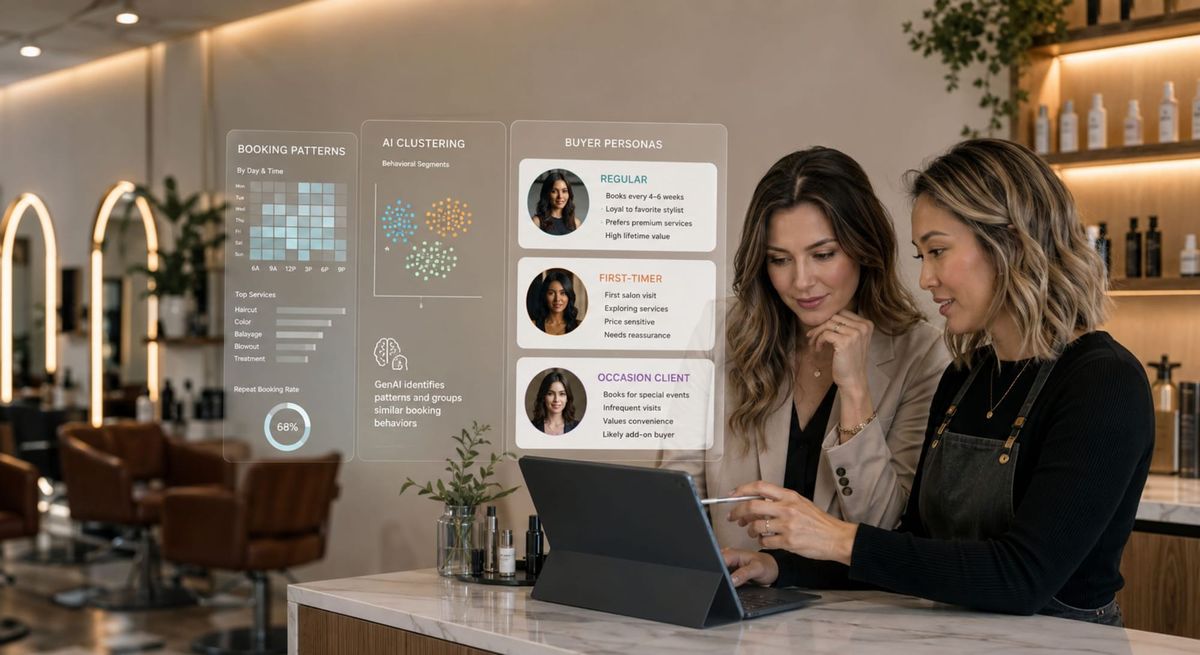
Segmentation, Targeting & Buyer Personas: How I Use GenAI to Understand Real Humans
Learn how segmentation and targeting differ from buyer personas - and how to use GenAI prompts and empathy maps to create human, data-grounded messaging fast.

Most marketing strategies fail not because of bad tactics, but because they talk to everyone and connect with no one. In this article, I'll walk you through how I use GenAI tools to move beyond demographic spreadsheets and build audience profiles that feel like actual humans, complete with fears, motivations, and the words they use when searching for a solution. Whether you're building a campaign from scratch or rethinking an existing one, this framework will change how you approach your audience.
Stop Marketing to Groups. Start Writing to Humans.
Marketing teams know the words: segmentation, target audience, persona. Still strategies fail not because of bad tactics, but because they talk to everyone and connect with no one. If your emails sound generic, your ads feel bland, or your content struggles to land emotionally, you might be stopping the thinking process one step too early. Let me explain why, with a dinner party.
What Is Market Segmentation and Why Most Marketers Get It Wrong
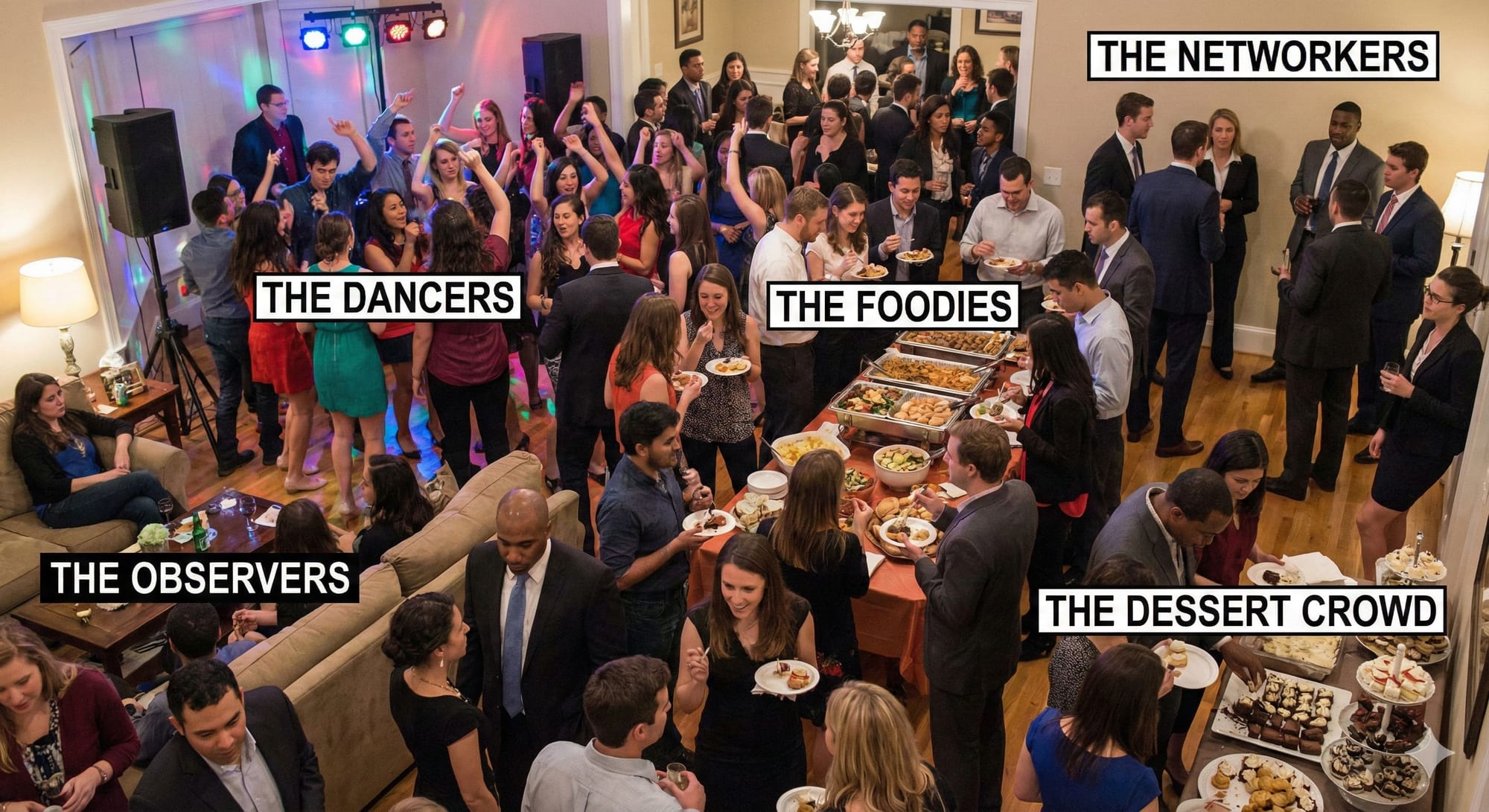
Imagine walking into a massive house party with 1,000 people. It's chaos. So your brain does what brains do best: pattern recognition. You mentally group them – the dancers; the foodies near the buffet; the networkers in suits; the quiet observers; the "I'm only here for dessert" crowd.
That's segmentation. It means organizing the chaos, slicing a market into meaningful groups based on behavior, needs, context, or mindset. Not by age bracket alone. By how people think and act.
☕ Coffee example: A coffee company might identify segments like Coffee Snobs, Busy Commuters, and Social Drinkers – each with completely different motivations for their morning cup.
How to Define Your Target Audience with Precision
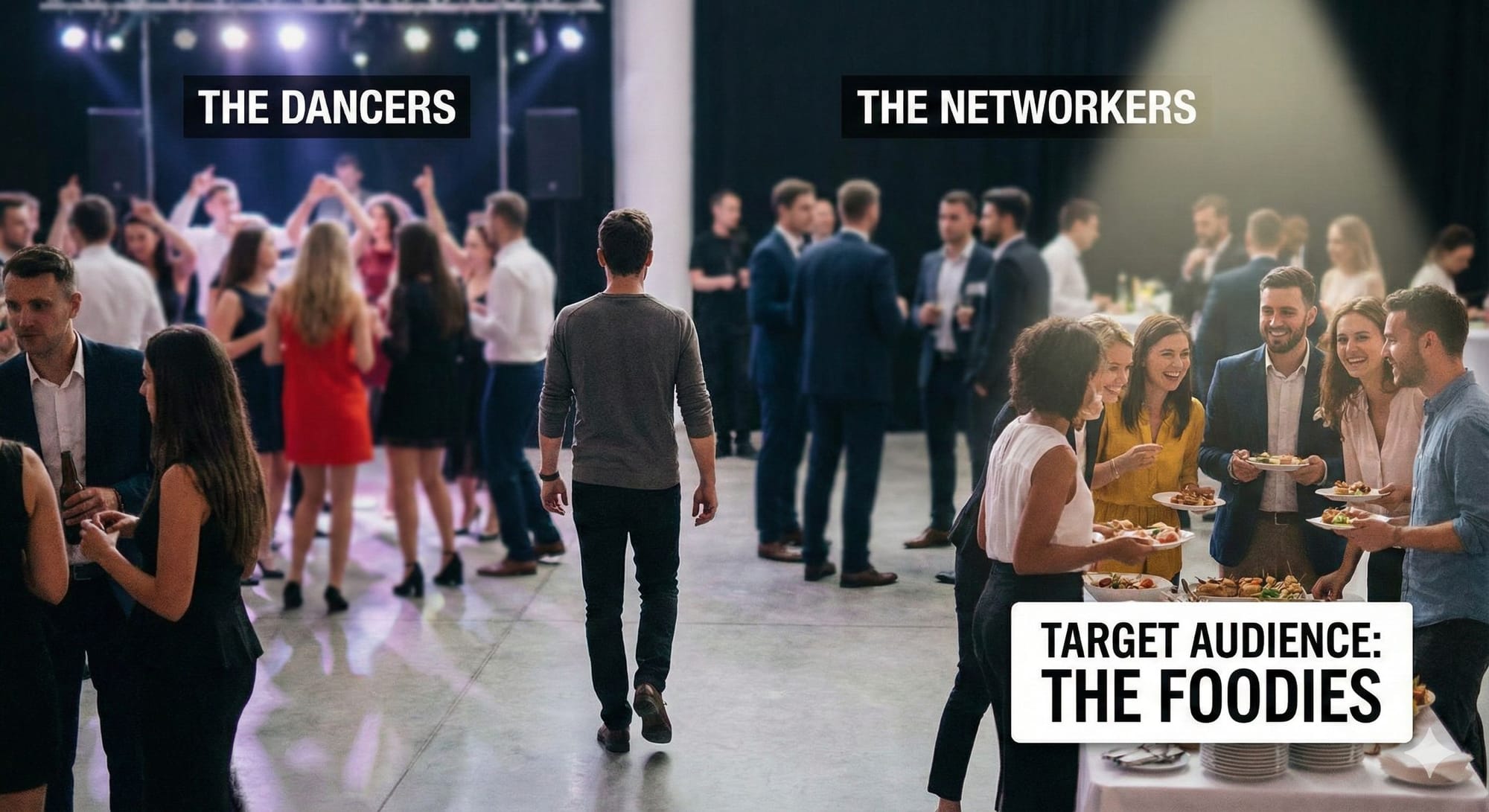
Here's the thing: you can't hang out with everyone at the party. You only have enough energy, budget, and focus for one group. So you make a deliberate choice, not the dancers, not the networkers. You walk straight to the Foodies.
That's targeting. Your target audience is the segment you deliberately invest in. And yes, it also means intentionally saying no to everyone else. That's not a weakness in the strategy. That's the strategy.
☕ Coffee example – The company chooses Busy Commuters , people aged 25-45 who value speed, consistency, and convenience over latte art. Everyone else is secondary for now.

What Is a Buyer Persona and Why Demographics Aren't Enough
Now you're standing with the Foodies (your target audience). But you can't have a real conversation with a group, you have to talk to a person. You focus on Sarah. She's holding a spicy taco. You learn she hates cilantro and is allergic to peanuts. Now you know exactly what to say to her.
That's a buyer persona. A persona is the fictional-but-grounded human who represents your segment , so your messaging can become specific, emotional, and actionable.
☕ Coffee example: Meet Commuter Chris. He's 32, always running 5 minutes late, gets anxious if the line is long, and has a calendar full of back-to-back meetings. He's not just a "busy commuter" – he's a person with a specific pressure point your brand can solve.
The Creative Truth Most Teams Miss
Business marketers often stop at Target Audience, because that's who they can target in paid platforms. But creative marketers go one level deeper, down to Persona. You can't write an emotional email to a target audience. You write it to Chris.
How to Use an Empathy Map to Understand Your Buyer Persona
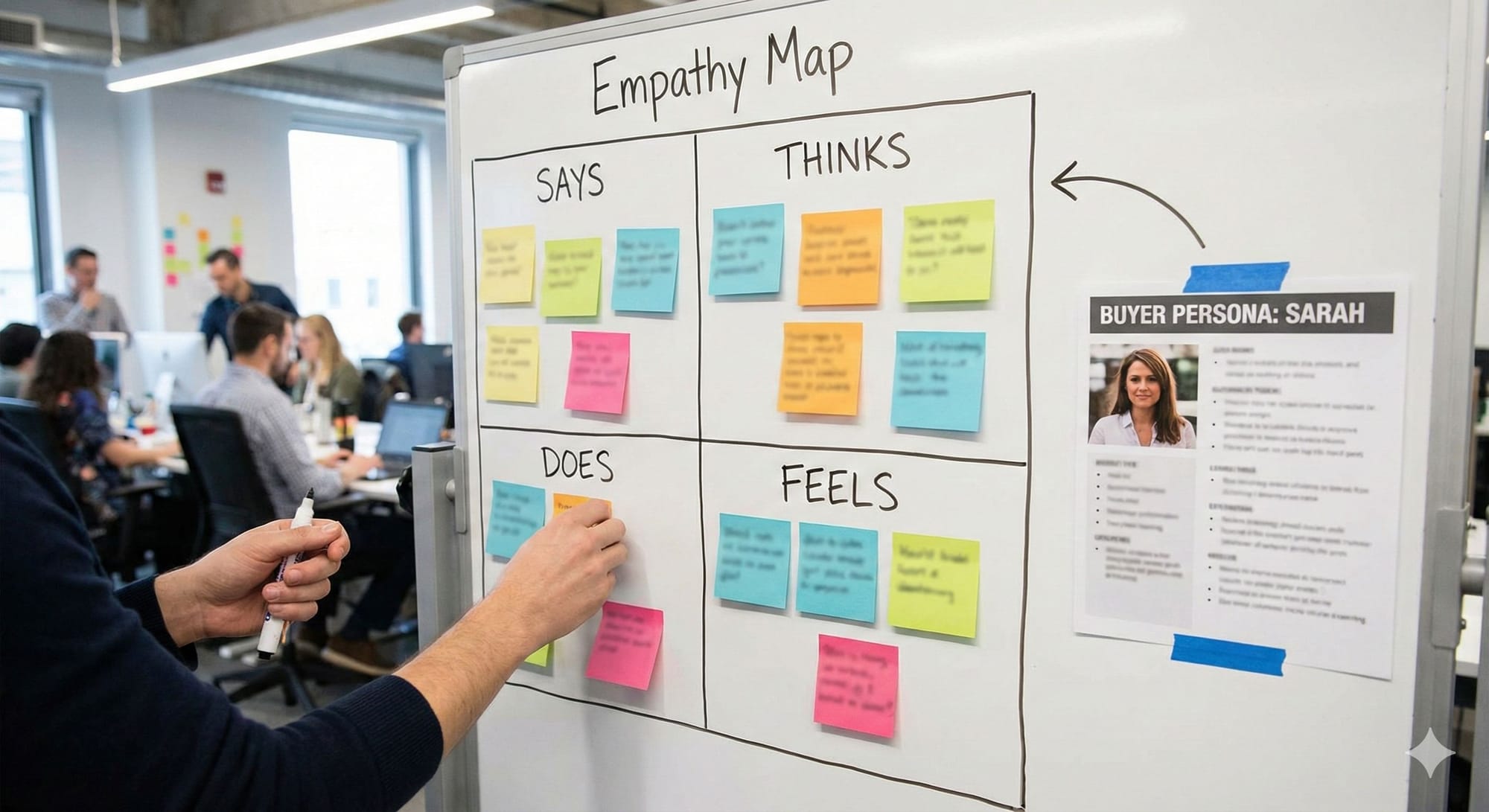
Once you have the persona, the empathy map becomes the natural next step , because the question shifts from "What do we sell?" to "What is this person actually living through?"
- Commuter Chris thinks: "If I'm late for this meeting, my boss is going to kill me."
- Commuter Chris sees: a long line, a slow barista, his watch ticking.
- Commuter Chris feels: anxiety, time pressure, social stress.
- Commuter Chris wants to gain: speed, relief, a sense of control.
Now notice the difference in messaging.
- If we targeted the broad segment "Coffee Drinkers," we'd advertise: "Great taste."
- Because we understand Chris, we advertise: "Mobile Order & Pay - Skip the Line."
We didn't just solve thirst. We solved anxiety. That's what empathy mapping does - it turns a persona into a creative brief.
Common Mistakes Marketers Make When Building Buyer Personas
After 20+ years in marketing, I've reviewed hundreds of buyer personas. Most have the same problems. Here's what to avoid:
Mistake #1: Building personas from assumptions, not data
The most common version of a buyer persona looks like this: "Ana, 35, urban, university-educated, interested in wellness." That's not a persona; that's a demographic filter. A real persona is built from actual customer conversations, support tickets, reviews, and behavioral signals. GenAI can help you structure and synthesize this research - but it cannot replace the raw input. Feed it real data (customer quotes, feedback, FAQs) and it will give you gold. Feed it assumptions and you get a polished version of what you already (wrongly) believe.
Mistake #2: Creating too many personas
More is not better. A brand with 7 active personas has 0 [zero] real personas, because no team can write, design, and campaign for 7 different humans simultaneously. Start with 1-2 primary personas. Master those. Add more only when your content is consistently performing for the first set.
Mistake #3: Building the persona once and never updating it
Markets shift. Buyer language changes. What motivated your customer in 2022 may not drive them today. Treat your buyer persona as a living document, revisit it quarterly, especially when you see a drop in engagement or message resonance. GenAI makes this refresh fast: feed it your latest reviews and customer data and ask it to update the profile.
The GenAI Prompt I Use to Build Buyer Personas in Minutes
Here's the practical part. Want a simple way to bring this to life immediately?
1. Pick a brand.
2. Define the target audience (e.g., Busy Parents).
3. Create 1 persona (name, age, job).
4. Use a GenAI tool to roleplay as that persona.
5. Fill out an empathy map based on the answers.
6. Compare results across different GenAI tools to see which gives you the most nuanced output.
Copy-paste this prompt directly into ChatGPT, Claude, or Gemini:
Act as my Buyer Persona, [Name].
You are [Job Title] and you struggle with [Problem].
I am going to ask you questions about your day.
Answer with deep emotion.
Then ask:
• What annoys you before 9am?
• What would make your day feel easier?
• What do you secretly fear about this problem?
• What’s the moment you decide to buy?
You'll be surprised how quickly your messaging sharpens once you have those answers in front of you.
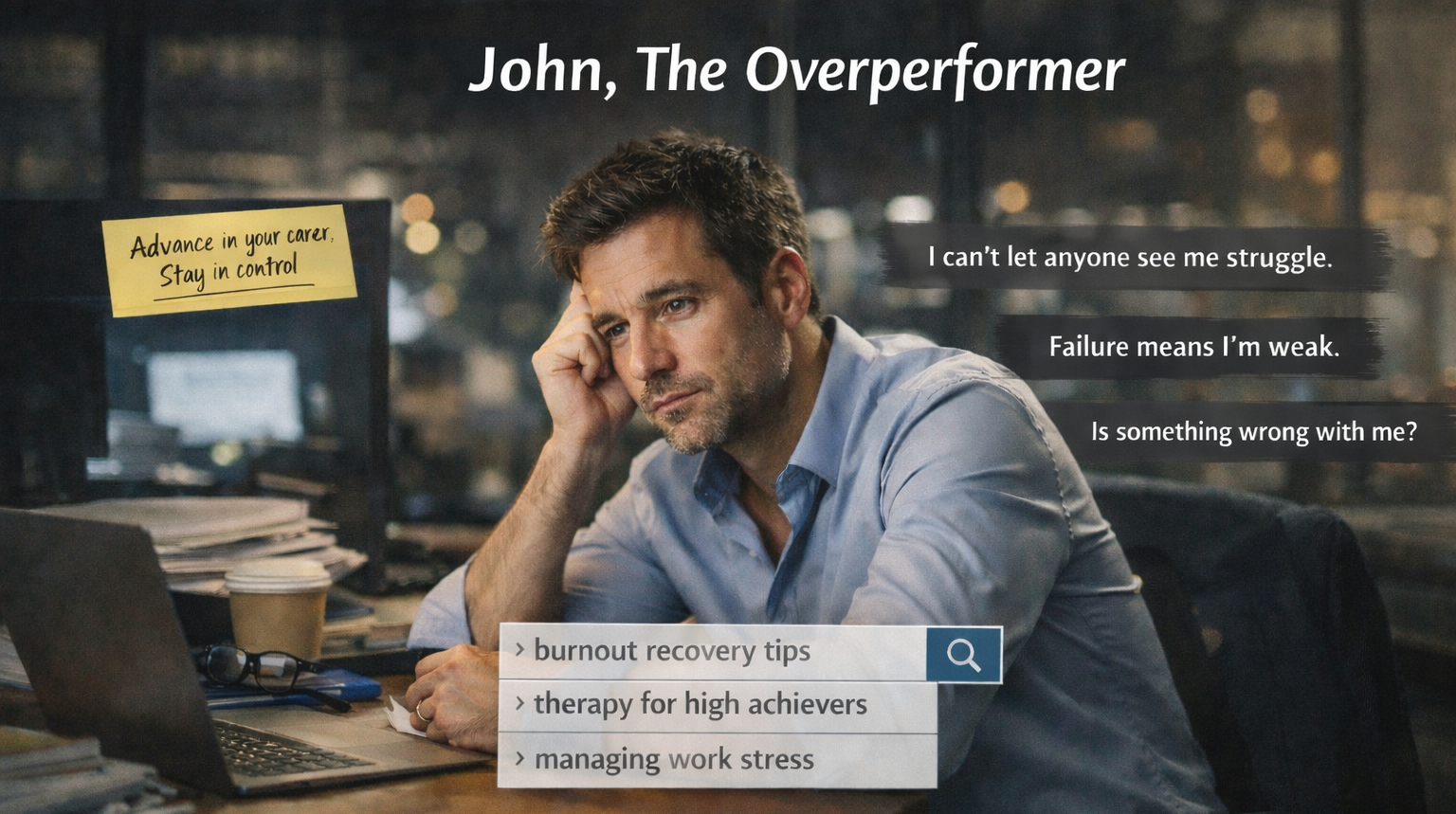
What a GenAI-Generated Buyer Persona Actually Looks Like
To make this concrete, here's a real example of what you get when you run a well-structured prompt. I used this for a psychology practice targeting adults dealing with work-related burnout:
Persona Name: John, The Overperformer
Demographics: Male, 34-42, urban professional, team lead or mid-senior manager, above-average income
Goals: Be seen as competent and in control. Advance in his career without sacrificing his identity. Find balance without admitting vulnerability.
Pain Points: Feels exhausted but can't justify slowing down. Believes asking for help is a sign of failure. Struggles to separate his professional worth from his personal value.
Fears: Being perceived as weak or overwhelmed. Losing status if he admits he's struggling. That therapy means something is "seriously wrong" with him.
Motivations: Evidence-based approaches (he'll Google the therapist before calling). Confidentiality and professionalism. Flexible scheduling that fits his packed calendar.
How he searches: "burnout recovery without losing productivity", "does therapy actually work for stress", "how to manage anxiety at work"
What he needs to hear: "You don't have to have a breakdown to benefit from therapy. High performers use it as a strategic tool, not a last resort."
Notice how different this is from "Male, 35-40, stressed professional". This persona tells you exactly what to write, how to position the service, and which fears to address - in every piece of content, from the homepage headline to the Instagram caption. That's the difference between a demographic and a persona. And that's what GenAI, used properly, can help you build in under 30 minutes.
How to Apply Your Buyer Persona to Real Marketing Decisions
A buyer persona sitting in a Google Doc is worthless. The value is in the application. Here's how I use personas to drive every content decision:
- Headlines and titles: I always ask: would Mihai stop scrolling for this? If the answer is no, I rewrite it.
- Content topics: Every blog article, post, and newsletter gets filtered through the persona's pain points. If it doesn't answer something Mihai is actively searching for, it doesn't get published.
- Tone calibration: Mihai responds to logic, data, and peer validation, not vulnerability-first messaging. Knowing this changes every caption, every subject line, every CTA.
- Channel selection: Mihai is on LinkedIn during lunch and reads long-form content on weekends. Knowing where he is changes when and where you publish.
- Ad copy and targeting: The fears, motivations, and exact language your persona uses become your ad copy - sometimes verbatim.
The goal is simple: every content decision should have a name behind it. Not "our audience" – but Mihai. Or Ana. Or Chris. When you write for a real human, real humans respond.
Segmentation organizes. Targeting focuses. Personas humanize. And empathy maps turn human insight into creative muscle. If your marketing feels too general, you probably don't need a new channel - you need a deeper zoom.
Final Thought
Buyer personas are just the first step. The real magic happens when you use them to drive every content decision - from blog titles to ad copy to sales emails. I work with and write about GenAI, marketing strategy, and the frameworks that actually work in practice.
Do you want to explore how this works for your specific business?
Recommended Use Cases:
 Diana Socaciu